Foundation Repair in New Braunfels and Comal County
A straight explanation of how a Central Texas foundation gets diagnosed and fixed, what it costs, and when you should wait.
Mon to Sat 7am to 7pm. Calls answered, not voicemail.
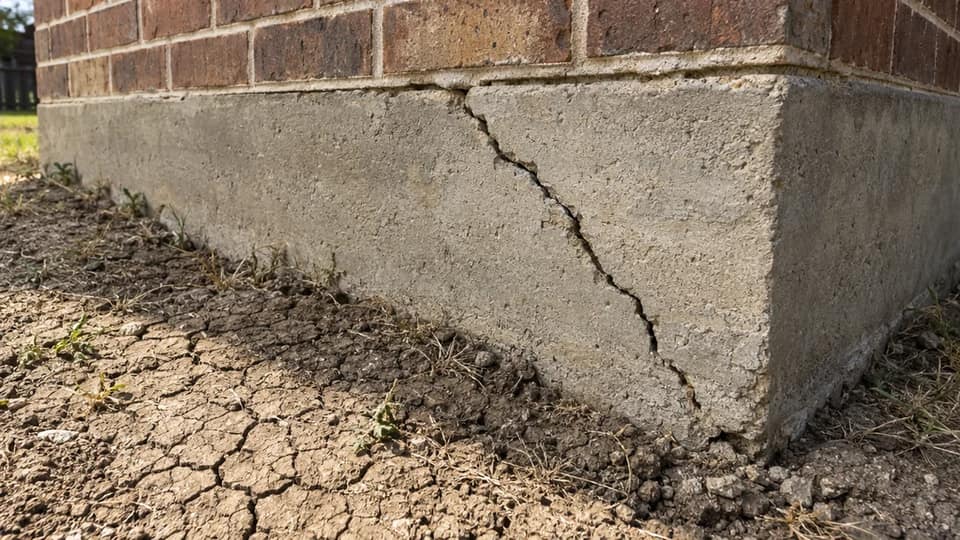
What foundation repair means here
In New Braunfels, foundation repair almost always means one of two things: underpinning a slab with piers so the perimeter stops dropping, or re-supporting a pier and beam house whose wood or concrete supports have settled, rotted or shifted. Everything else, from crack injection to drainage, is supporting work.
The ground decides the approach. East of I-35, in Westpointe, Creekside and out FM 1101 toward Hunter, slabs sit on Houston Black and Heiden clay that can shrink and swell several inches between a wet spring and a dry September. Those homes get piers pressed or driven down past the active clay zone. West of the highway, in Oak Run, Rockwall Ranch and up Highway 46, there is often limestone within four to eight feet. Piers there reach refusal fast, and the problem is more often fill settlement on a cut lot than clay movement.
Pier and beam homes are a different animal. Downtown New Braunfels, the Mill Street and Sophienburg Hill historic districts, Gruene and the old parts of Seguin were built on cedar posts, concrete blocks or shallow concrete pads with a crawlspace underneath. Those homes are adjusted from below, not underpinned from the side.
How the contractor evaluates the house
A proper evaluation starts with a relative elevation survey. The technician sets a laser or a zip level at a reference point and reads the floor on a grid across the whole house, including the garage. The numbers go on a sketch. A house that reads zero at the front door and minus 2.1 inches at the back left corner tells you where the soil has let go.
Then they walk the perimeter. Brick cracks, the width and direction of each one, separation at the frieze board, gaps between the slab edge and the dirt, downspouts dumping at the corners, live oaks and cedar elms within fifteen feet of the slab, and any soft or green spot in the lawn that might be a sewer leak. Inside, they note which doors drag and which cracks run diagonally off door and window corners.
If the elevation survey shows more than about an inch of differential across a room, or the cracks are active and wider than a quarter inch, piers go on the drawing. If the house is within tolerance and the cracks are stable, the honest recommendation is usually drainage, watering and a recheck in six months. That happens on a fair share of calls.
Repair methods used in Central Texas
Pressed concrete piers are the workhorse. Precast concrete cylinders, usually six inches in diameter and twelve inches tall, are hydraulically pressed into the ground one on top of the other under the slab edge until the stack refuses to go deeper. On the east side of New Braunfels that often means eight to fourteen feet. A cap and shims transfer the load. Cost is moderate and the method has decades of history in Texas.
Steel piers use sections of steel pipe driven the same way, but they go deeper and carry more load per pier, which matters on heavy two-story brick homes or where the active clay is thick. They cost roughly double a concrete pier.
Drilled bell-bottom piers are poured in place: a hole is drilled, the bottom is belled out for bearing area, rebar is set and concrete is poured. They are common on new construction and on repairs where an engineer specifies them. They need cure time before the house can be lifted.
Pier and beam repair is shimming and re-supporting from the crawlspace, adding or replacing pads and posts, sistering sagging beams, and replacing rotted sills and joists. Polyurethane foam injection is used to lift interior slab sections or fill voids, not as a substitute for piers at the perimeter.
What it costs in the New Braunfels area
Pressed concrete piers run roughly $400 to $800 each installed. Steel piers run $1,200 to $3,000 each. Drilled bell-bottom piers fall in between and vary with depth. A typical partial perimeter repair uses eight to fifteen piers, so most slab jobs land between $4,000 and $15,000, with full-perimeter jobs on larger homes going higher.
Pier and beam work is usually $3,500 to $10,000 depending on how much wood has to be replaced and how much of the house needs adjustment. Interior piers through the slab, which require breaking and patching the floor, add cost and are only used when the interior has dropped.
Permits, plumbing tests before and after a lift, and engineer letters are line items the estimate should show. Ask for them.
Warranties and who stands behind the work
Texas does not license foundation repair contractors. What protects you is the contractor's insurance, their track record in the area, and a written warranty that transfers to the next owner. Pier warranties on steel and concrete piers in this market typically run from ten years to lifetime on the piers installed, covering adjustment if those piers move. They do not cover new movement in areas that were not piered, which is why the pier plan matters.
The contractor we route your call to carries general liability insurance and provides a written transferable warranty on pier work. We confirm that before we send anyone your way.
Related services
Slab Foundation Repair in New Braunfels
Nearly every home built in Comal County since the 1970s sits on a slab. Here is how a settled slab gets underpinned, and which pier makes sense on which side of I-35.
Pier and Beam Foundation Repair
The 1890s to 1950s houses on Mill Street, Academy Avenue, Hunter Road and around the Seguin courthouse square sit on posts and beams. They are fixed from underneath, and done right they outlast the slab homes around them.
House Leveling in New Braunfels
Leveling is the part of foundation repair homeowners picture: jacks under the house, the low corner coming back up. Here is what that actually involves and what it can realistically recover.
Drainage Correction and Foundation Protection
Piers fix what already moved. Drainage is what keeps the next section of the house from moving. On Comal County clay, it is not optional.
Foundation Inspection in New Braunfels
A foundation inspection is a set of measurements and a walk-around by someone who has seen a thousand Comal County slabs. Here is what it covers, what it does not, and when you need an engineer instead.
Foundation Crack Repair in New Braunfels
Every brick house in Comal County has a crack somewhere. The job is telling the ones that mean the soil is moving the house from the ones that just mean it is a brick house in Texas.
Questions homeowners ask
How long does a slab pier job take?
Most residential jobs are one to three days. Day one is digging the pier holes at the slab edge, day two is pressing piers and lifting, and the last day is backfill and cleanup. Interior piers add time for breaking and patching the slab.
Will they have to dig up my landscaping?
Each exterior pier needs a hole roughly two feet square at the slab edge. Shrubs in the way get moved or removed. Crews put the soil back and tamp it, but expect bare dirt at each pier location for a season.
Should I get a plumbing test before foundation repair?
Yes, if the house is on the clay side or has any sign of a leak. A hydrostatic test on the drain lines before the lift tells you whether a leak caused the movement, and a test after confirms the lift did not crack a line. Lifting a slab over an undiagnosed sewer leak is how you end up doing the job twice.
Do I need an engineer involved?
Not for every repair. For a routine partial-perimeter job on a one-story slab, the contractor's plan is usually enough. For a sale, a lender, a large or complex lift, or a house that has had prior repairs that failed, an independent licensed professional engineer should write the repair plan and sign off at the end.
Can the house be lifted back to perfectly level?
Rarely, and it is usually not the goal. The target is to lift the settled area back toward the house's original elevation without overstressing framing, plumbing or brick that has already adjusted to the current position. Most lifts recover most of the drop.
Service area
Comal, Guadalupe and Hays County homes, roughly a 35 mile ring around New Braunfels.
Start with an elevation survey, not a sales pitch
Call (830) 626-9042 and we will route you to a licensed, insured foundation contractor who measures first.
Calls may be recorded for quality and training. Your details go only to the contractor who will serve you. How this works