Foundation Repair in San Marcos, Texas
San Marcos straddles the Balcones Escarpment more sharply than any town between Austin and San Antonio. The west side climbs onto limestone; the east side drops onto deep clay. Which side your house is on decides how it moves.
Mon to Sat 7am to 7pm. Calls answered, not voicemail.
Two cities, geologically
Drive west on Wonder World Drive from I-35 and within a mile you are climbing. That slope is the Balcones Escarpment, and San Marcos is built on both sides of it. The Texas State campus, the Purgatory Creek greenbelt, La Cima and the neighborhoods off Hunter Road sit on the uplifted side, where Edwards limestone is often within a few feet of the surface and the soil is a thin layer of cherty clay loam. Homes there rarely have deep clay movement. What they have is shallow soil over rock with pockets of fill, and slabs that span from rock to fill and crack at the seam.
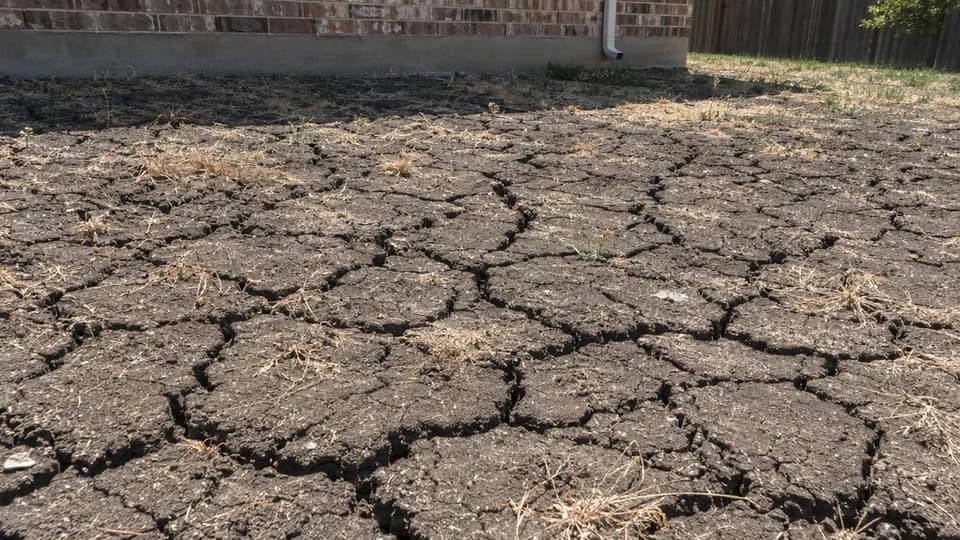
East of the highway it is another world. The Blanco River flood plain and the ground out toward Highway 80 and Martindale are Blackland Prairie clay, the same Houston Black that runs through Seguin and east New Braunfels. Blanco Vista, Whisper and the subdivisions off Yarrington Road and Old Bastrop Highway sit on it. Those slabs ride the wet-dry cycle hard.
The two rivers add a third condition. San Marcos has serious flood history, including the Memorial Day and October floods of 2015 along the Blanco. Lots near the Blanco and the San Marcos River carry alluvial soils, mixed clay and gravel, that can be loose and inconsistent. A house on river-bottom alluvium can settle unevenly without any drought at all.
Blanco Vista, Whisper and the east-side subdivisions
Blanco Vista is a 575-acre master-planned community on the Blanco River about three miles west of I-35, built out mostly over the last fifteen years by Lennar, Ashton Woods and regional builders on lots fifty to seventy feet wide. The estate lots along the river bluff are on the terrace; the interior phases are on clay. Homes there are young enough that the first drought cycles are only now showing what the soil under them does. The typical call is a settled rear corner where the backyard slopes to a drainage easement and the soil dries faster, with stair-step cracks in the brick at the patio.
Whisper, along I-35 north of town near Yarrington Road, is newer still and on similar ground. The farmland it replaced had never carried a slab, and the clay is finding its equilibrium under each house now. The advice there is the same as for new east-side New Braunfels: get the gutters discharging well away from the slab, water the perimeter in summer, and document hairline cracks with dates so you can tell active from static when the builder's warranty questions come up.
Older east-side neighborhoods like Blanco Gardens, Sunset Acres and the streets off Highway 80 have 1960s through 1980s slabs that have been through many cycles and often have had at least one prior repair. Ask for the paperwork.
Kissing Tree and the west side
Kissing Tree is Brookfield Residential's 1,332-acre active-adult community off Hunter Road on the southwest side, approved in 2011 as Paso Robles and building since the mid-2010s. It sits on the limestone side with rolling terrain, which means cut-and-fill lots. On a sloped lot the builder cuts the uphill side and fills the downhill side to make a level pad; the slab then bears partly on undisturbed rock and partly on compacted fill. Properly compacted fill performs well. Fill that was placed wet or in thick lifts settles over the first several years, and the slab cracks diagonally where it crosses from rock to fill. One-story homes in Kissing Tree with a long crack through the garage toward the downhill corner are usually this.
La Cima and the newer communities off Wonder World Drive and Ranch Road 12 have the same cut-and-fill pattern. The repair is piers under the fill side pressed to the rock, which happens quickly because the rock is shallow. Pier counts are often lower and depths shorter than on the clay side, so west-side jobs tend to cost less per house.
The historic districts and the campus area
The Belvin Street Historic District west of the courthouse square, the blocks around Texas State on the hill, and the older houses in Dunbar and along the river are largely pier and beam, built from the 1880s through the 1940s on cedar posts, brick piers and concrete pads. Many have been converted to student rentals, and deferred maintenance in the crawlspace is common: rotted sills under bathrooms that have leaked for years, posts knocked off their footings, and beams spanning twelve feet that should span six.
These houses are repaired from below with new pads or pressed piers along the beam lines, sister beams, and sill replacement. Investors buying in the campus area should budget for a crawlspace inspection on any house over fifty years old; the floor sloping toward the kitchen is not character, it is a sunk post.
Belvin Street is a local historic district, so any exterior changes to skirting or vents go through the city's historic preservation commission. Work under the house does not.
Working in San Marcos and Hays County
The City of San Marcos requires a permit for foundation repair inside city limits, and the contractor pulls it. Outside the city, in the Hays County ETJ toward Martindale and Wimberley, the county has fewer requirements but the lender and the engineer will still want documentation.
The contractor we route San Marcos calls to works Hays County regularly and can coordinate a licensed professional engineer and a hydrostatic plumbing test when a sale or a lender needs them. Appointments are available Monday through Saturday, and most inspections in San Marcos are scheduled within a few business days.
Questions homeowners ask
How do I know which side of the escarpment my house is on?
If your lot is uphill and you hit rock digging a flowerbed, you are on the limestone side. If you have black, sticky soil that cracks into plates in August, you are on the clay side. I-35 and Hunter Road are the rough dividing lines in San Marcos, but the boundary wanders.
What does foundation repair cost in San Marcos?
Pressed concrete piers run about $400 to $800 each and steel piers $1,200 to $3,000 each. East-side clay jobs commonly need eight to fifteen piers pressed to twelve feet or more. West-side cut-and-fill jobs often need fewer piers to shallower depth. Most jobs land between $3,500 and $15,000.
My Blanco Vista house is six years old and has cracks. Is this normal?
Hairline cracks in brick mortar and at drywall corners in a new house on east-side clay are common through the first few drought cycles. Stair-step cracks wider than a quarter inch, or doors that stick seasonally on one side of the house, are worth an elevation survey. Keep dated photos for the builder's structural warranty.
Do flood-zone lots near the Blanco have foundation problems?
Flooding itself rarely damages a slab. The alluvial soil along the river is the concern: it can be loose and variable, and it saturates and dries differently than the clay or rock a block away. Homes on river terraces benefit from an elevation survey before purchase.
Can you work on a student rental near Texas State while tenants are in it?
Yes. Pier and beam work is done from the crawlspace and exterior pier work is done from outside. Tenants lose water for a few hours during a plumbing test and may hear jacking. Interior slab piers are the exception and need a room cleared.
Service area
Comal, Guadalupe and Hays County homes, roughly a 35 mile ring around New Braunfels.
Foundation help in San Marcos, on either side of the hill
Call (830) 626-9042 Monday through Saturday. We route your call to a licensed, insured foundation contractor serving Hays County.
Calls may be recorded for quality and training. Your details go only to the contractor who will serve you. How this works