Steel vs Concrete Piers
The pier method is the biggest decision on a foundation estimate. Here is how the common types compare on New Braunfels clay and Hill Country limestone.
Mon to Sat 7am to 7pm. Calls answered, not voicemail.
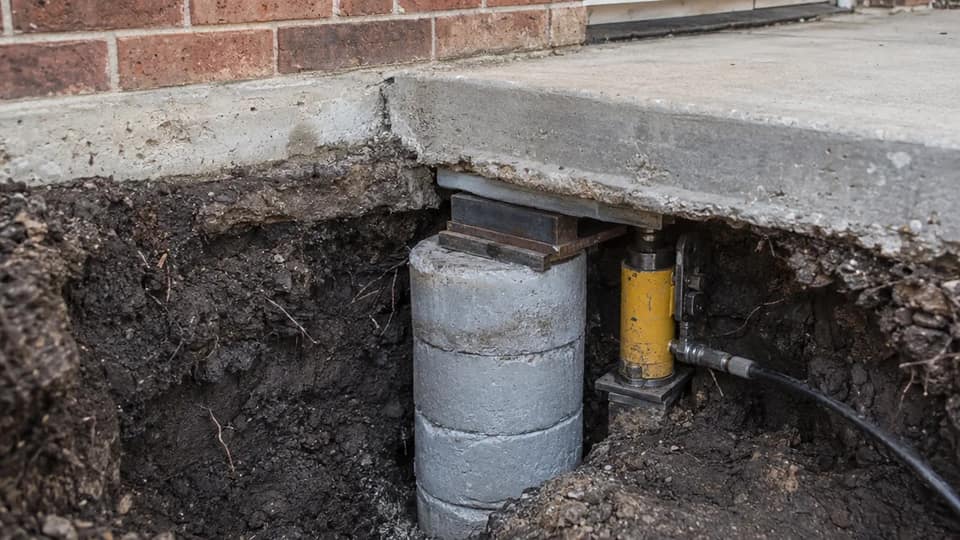
Pressed concrete piers
Precast concrete cylinders are stacked and pressed into the ground with a hydraulic jack, using the weight of the house as resistance, until they will not go any deeper. They are the most common repair in Central Texas.
Cost: roughly $400 to $800 per pier. Strengths: proven, fast to install, cost effective. Limits: depth depends on where the soil stops them, which can be shallower than the active clay zone on deep east-side clay.
Steel push piers
Sections of steel pipe are driven down, again using the house as resistance, often to bedrock or very dense soil. They can go much deeper than concrete cylinders.
Cost: roughly $1,200 to $3,000 per pier. Strengths: depth, strength, consistency. A good fit where clay is deep or the house is heavy. Limits: higher cost, and the steel needs proper coating for long life.
Helical piers
Steel shafts with screw-shaped plates are turned into the ground with a hydraulic motor. Because they do not need the house's weight to install, they work well for lighter structures, additions and porches, and for new construction. Prices are generally in the steel pier range.
Drilled concrete piers
A hole is drilled, reinforced with steel and filled with poured concrete. Engineers sometimes specify them, especially in rock. They take longer because the concrete has to cure, and they often cost more than pressed piers.
Which one fits your house
- East of I-35 on deep clay: steel piers are often worth the extra cost because they reach below the moving zone.
- West side, shallow limestone: pressed concrete piers often hit refusal on rock quickly and perform well.
- Additions, porches, light structures: helical piers.
- When an engineer has written a repair plan: follow the plan.
Questions to ask before you sign
- How deep do you expect the piers to go, and do you record the depth of each one?
- Is the warranty for the life of the structure, and does it transfer to the next owner?
- Does the warranty cover adjustments if the house moves again?
- Will you show me the pier locations on a floor plan?
More foundation guides
Foundation Repair Cost in New Braunfels
Real ranges for Comal and Guadalupe County homes, what drives the number up or down, and how to read an estimate before you sign one.
How Much Does House Leveling Cost?
Leveling a house on blocks and lifting a settled slab are very different jobs. Here is what each one usually costs around New Braunfels and what moves the price.
Cracks in Brick: Cosmetic or Foundation?
Almost every brick house in Comal County has a crack somewhere. Here is how to tell which ones are worth an inspection and which ones are just brick being brick.
Sticking Doors and Sloping Floors
Doors and floors are often the first place foundation movement shows up indoors. Here is how to tell seasonal swelling from a slab that is moving.
Foundation Corner Pops
That triangle of concrete cracking off the corner of your slab under the brick looks alarming. Most of the time it is not structural. Here is how to tell.
Related services
Foundation Repair in New Braunfels and Comal County
A straight explanation of how a Central Texas foundation gets diagnosed and fixed, what it costs, and when you should wait.
Slab Foundation Repair in New Braunfels
Nearly every home built in Comal County since the 1970s sits on a slab. Here is how a settled slab gets underpinned, and which pier makes sense on which side of I-35.
Pier and Beam Foundation Repair
The 1890s to 1950s houses on Mill Street, Academy Avenue, Hunter Road and around the Seguin courthouse square sit on posts and beams. They are fixed from underneath, and done right they outlast the slab homes around them.
House Leveling in New Braunfels
Leveling is the part of foundation repair homeowners picture: jacks under the house, the low corner coming back up. Here is what that actually involves and what it can realistically recover.
Drainage Correction and Foundation Protection
Piers fix what already moved. Drainage is what keeps the next section of the house from moving. On Comal County clay, it is not optional.
Foundation Inspection in New Braunfels
A foundation inspection is a set of measurements and a walk-around by someone who has seen a thousand Comal County slabs. Here is what it covers, what it does not, and when you need an engineer instead.
Foundation Crack Repair in New Braunfels
Every brick house in Comal County has a crack somewhere. The job is telling the ones that mean the soil is moving the house from the ones that just mean it is a brick house in Texas.
Questions homeowners ask
Are steel piers always better?
Not always. They are deeper and stronger, but on shallow limestone, pressed concrete may reach solid rock at a fraction of the cost. The right answer depends on your soil.
How long do piers last?
Properly installed concrete and coated steel piers are expected to last for decades. The warranty terms tell you how confident the installer is.
Is mudjacking or foam a substitute for piers?
No. Mudjacking and polyurethane foam raise and fill under slab sections, which is good for driveways, patios and small voids. They do not support a settled foundation beam on moving clay.
Can a contractor mix pier types on one house?
Yes. Some jobs use steel where clay is deepest and concrete elsewhere. That should be shown clearly on the estimate.
Service area
Comal, Guadalupe and Hays County homes, roughly a 35 mile ring around New Braunfels.
Ask which method fits your soil
Call (830) 626-9042 Monday through Saturday, 7am to 7pm. A local contractor measures first and puts the number in writing.
Calls may be recorded for quality and training. Your details go only to the contractor who will serve you. How this works